

How to Reduce Swelling After Lip Fillers: Expert Aftercare Guide 2026
- The Pond Parlor

- Jun 20
- 12 min read
The "overdone" look most clients fear isn't usually a result of too much product, but rather a temporary inflammatory response that obscures your true results. It’s natural to feel a surge of social anxiety when you look in the mirror 24 hours post-injection and see significant volume or minor asymmetry. Understanding how to reduce swelling after lip fillers is the essential first step in managing this transition. This initial tenderness and edema are simply your body’s natural reaction to precision enhancement, not a reflection of your final aesthetic outcome.
You deserve a recovery process that’s as seamless and sophisticated as the procedure itself. This guide provides professional-grade protocols to minimize post-treatment inflammation and accelerate your healing timeline safely. We’ll outline the 2026 standards for "lip mapping" recovery, including targeted temperature control and internal anti-inflammatory support. You’ll gain a clear, hour-by-hour understanding of what to expect as your lips settle into their final, symmetrical shape. Expect minimal downtime and a direct path to the high-end, natural-looking results you planned for.
Key Takeaways
Professional-grade protocols for acute inflammation management, including targeted temperature control and strategic head elevation.
Clinical insights into how to reduce swelling after lip fillers through sodium restriction and optimized internal hydration.
Comprehensive healing timeline to distinguish between expected post-injection micro-trauma and potential procedural complications.
Specialized dietary and lifestyle adjustments designed to accelerate tissue recovery and maintain aesthetic symmetry.
Advanced injection precision and low-trauma techniques focused on achieving high-impact results with minimal downtime.
Table of Contents
Why Lips Swell After Dermal Fillers: The Biological Process
Swelling is an expected physiological response to precision aesthetic enhancement. When a practitioner introduces a dermal filler into the submucosal layer of the lips, the body initiates a localized inflammatory cascade. This process involves increased blood flow and the recruitment of signaling molecules to the site of the injection. Most patients seeking advice on how to reduce swelling after lip fillers are surprised to learn that peak edema is a sign of active tissue integration. It's a temporary phase where the body adjusts to the presence of the new volumizing agent.
Clinical data suggests that peak swelling usually occurs within the first 24 to 48 hours post-procedure. During this window, you might notice minor asymmetry or localized firmness. These are categorized as common side effects that reflect the body's natural healing mechanics rather than the final aesthetic result. Understanding the underlying biology helps manage expectations during the initial recovery transition.
To better understand this biological response, watch this helpful video:
The Role of Hyaluronic Acid
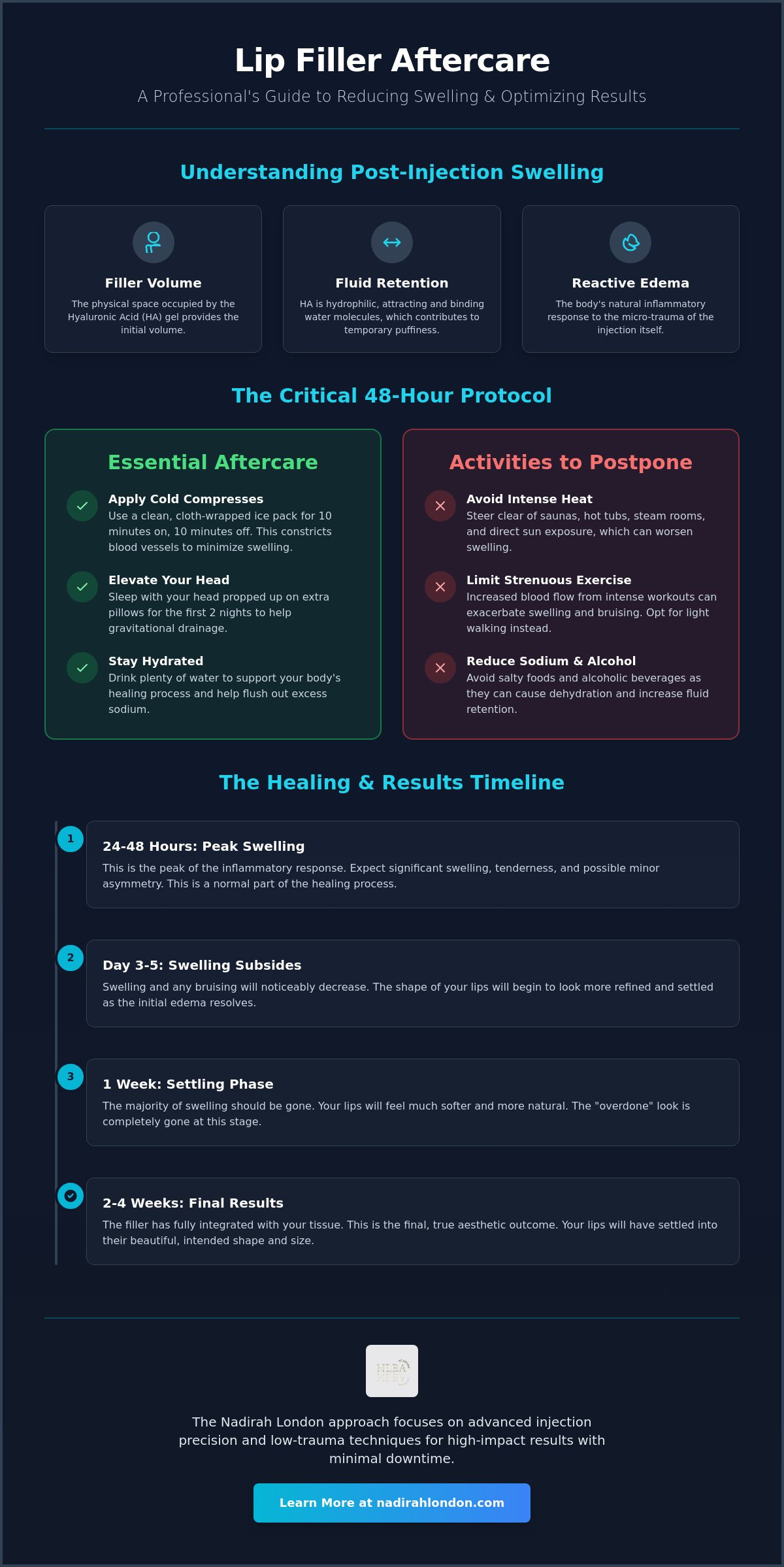
Hyaluronic Acid is a naturally occurring sugar molecule that retains 1,000 times its weight in water. Because modern fillers are hydrophilic, they actively attract and bind to water molecules immediately upon placement. This characteristic is what creates the desired volume; however, it also contributes to initial puffiness. While you research how to reduce swelling after lip fillers, distinguish between these two factors:
Filler Volume: The actual physical space occupied by the HA gel.
Fluid Retention: Temporary water weight drawn into the tissue by the HA's hydrophilic properties.
Reactive Edema: The body's inflammatory fluid response to the procedure itself.
Injection Trauma vs. Product Reaction
The physical act of injection causes micro-trauma to the delicate, highly vascular tissue of the lips. Unlike other facial areas, the lips contain a dense network of capillaries and sensory nerves, making them uniquely prone to rapid swelling. The technique used also dictates the level of inflammation. For example, advanced "Russian Lip" techniques often require multiple vertical entry points, which increases the total amount of micro-trauma compared to a traditional linear thread approach.
Standard tissue responses include:
Localized Erythema: Mild redness at the entry points.
Transient Firmness: A temporary "tight" sensation as the product settles.
Vascular Dilation: Increased blood flow to facilitate rapid cellular repair.
These symptoms are standard indicators of healing. They are not signs of an allergic reaction or product rejection, which are exceedingly rare with high-end, FDA-approved hyaluronic acid formulations.
The 48-Hour Protocol: Immediate Steps to Reduce Swelling
The 48-hour window following your procedure dictates the trajectory of your recovery. Precision in aftercare is just as vital as the injection technique itself. During this timeframe, the objective is to stabilize the filler and suppress the inflammatory response. Success relies on a combination of thermal management and gravitational drainage. Learning how to reduce swelling after lip fillers requires a disciplined approach to this critical window to ensure the most refined aesthetic outcome.
Temperature Control and Icing
Thermal regulation is the most effective tool for acute edema management. Applying a cold compress immediately after treatment constricts blood vessels, limiting the fluid accumulation that causes puffiness. To protect the delicate skin barrier, follow a strict 10-minutes-on, 10-minutes-off cycle. This prevents skin irritation and potential frostbite while maintaining a consistent cooling effect. A clean, soft cloth must always act as a barrier between the ice pack and your injection sites to maintain a sterile environment.
Simultaneously, you must avoid all sources of intense heat for at least 48 hours. Heat triggers vasodilation, which expands blood vessels and significantly worsens swelling. Many clinical resources, including this comprehensive dermal fillers recovery guide, highlight heat avoidance as a non-negotiable step for a smooth recovery. You should specifically avoid:
Saunas and steam rooms
Hot showers or intense baths
Direct, prolonged sunlight exposure
Facial steaming or hot beverages
Sleep Elevation and Posture
Gravity is a natural ally in your post-treatment protocol. For the first two nights, keep your head elevated above heart level using two firm pillows. This posture facilitates the drainage of interstitial fluid away from the face, preventing it from pooling in the perioral area. Sleeping on your back is essential. Side or stomach sleeping can apply uneven pressure to the newly placed product, potentially leading to migration or temporary asymmetry.
While it's tempting to examine the texture of your lips, you must resist the urge to massage or press the area. The filler remains malleable in the initial days; physical manipulation can displace the product before it fully integrates with your tissue. Managing these variables ensures your results remain symmetrical and refined. If you're interested in the technical precision behind these protocols, exploring our aesthetic training courses provides deeper insight into professional recovery standards.
Activity Restrictions
Physical exertion increases your heart rate and blood pressure, both of which exacerbate swelling and bruising. Postpone strenuous exercise for a minimum of 48 hours. High-intensity workouts drive blood flow to the face, which can turn minor puffiness into significant edema. Rest is a functional part of the "how to reduce swelling after lip fillers" strategy. Prioritizing stillness allows the inflammatory cascade to subside naturally, protecting your investment in your appearance.
Dietary and Lifestyle Adjustments for Faster Recovery
Optimizing your internal biochemistry is as critical as the initial injection technique. While external protocols like icing manage the immediate response, your systemic health dictates the speed of tissue repair. High-end aesthetic results rely on a controlled internal environment that discourages fluid retention and promotes rapid cellular healing. Success in how to reduce swelling after lip fillers depends heavily on what you consume during the first 72 hours.
Sodium management is your primary internal objective. Because Hyaluronic Acid is naturally hydrophilic, it binds to any available water in your system. High salt intake forces your body to retain excess fluid, which the filler then absorbs, leading to exaggerated puffiness and a distorted lip shape. Contrast this by prioritizing hydration with plain, filtered water. This helps your lymphatic system flush out metabolic waste and reduces the concentration of salt in your tissues.
Alcohol consumption must be strictly avoided for at least 48 hours post-treatment. Alcohol acts as a potent vasodilator, widening blood vessels and increasing blood flow to the face. This process significantly worsens edema and increases the risk of bruising. For a comprehensive look at lifestyle restrictions, many practitioners refer patients to these lip filler aftercare tips which emphasize the importance of blood-thinning avoidance. Abstaining ensures the inflammatory phase remains brief and manageable.
Anti-Inflammatory Supplements
Targeted supplementation can accelerate the resolution of bruising and swelling. These options provide a clinical advantage in your recovery:
Arnica Montana: Available in topical gels or oral pellets; it's a staple in aesthetic medicine for reducing ecchymosis (bruising) and localized swelling.
Bromelain: A proteolytic enzyme found in pineapple that assists the body in breaking down inflammatory proteins and clearing fluid from the tissues.
Vitamin C: Supports collagen synthesis and strengthens the walls of the micro-capillaries affected during injection.
Always consult with your practitioner or a healthcare professional before starting new supplements to ensure they don't interfere with existing medications.
Foods to Avoid and Embrace
Your diet during the healing phase should focus on stabilizing blood flow and minimizing irritation. Certain foods can inadvertently trigger a secondary inflammatory response in the perioral area.
Avoid Spicy Foods: Capsaicin triggers vasodilation and can physically irritate the injection sites, leading to increased redness and heat.
Embrace Vitamin K-Rich Greens: Leafy greens like kale and spinach support the body's natural clotting mechanisms, helping to resolve minor bruising more quickly.
Limit Refined Sugars: High-sugar diets contribute to systemic inflammation, which can prolong the initial "tight" feeling of the filler.
Focus on Lean Proteins: Amino acids provide the building blocks for tissue repair, ensuring the injection points heal without complication.
By aligning your nutrition with professional aftercare standards, you create the ideal conditions for a refined, symmetrical outcome. These lifestyle adjustments transform a standard recovery into a sophisticated, high-speed healing process.
The Healing Timeline: What is Normal vs. a Concern
A successful aesthetic transformation follows a predictable clinical progression. Understanding how to reduce swelling after lip fillers requires a realistic view of this biological timeline. While the immediate inflammatory response is visible, the true artistry of the procedure only emerges once the tissue stabilizes. Patience during the settling period is essential for maintaining the integrity of your results.
The standard recovery phases include:
Day 1-2: Peak Edema. Maximum swelling and localized tenderness. Temporary asymmetry is common as different areas of the lip react to the micro-trauma.
Day 3-5: Resolution Phase. Significant reduction in puffiness. Bruising typically transitions from deep purple to a lighter yellow or green hue.
Day 7-14: Tissue Integration. The hyaluronic acid gel binds with your natural collagen. Lips feel softer and the final, symmetrical shape begins to stabilize.
While active icing is the primary method for how to reduce swelling after lip fillers in the first 48 hours, the subsequent days rely on observation. Avoid booking any top-up or corrective sessions until the 14-day mark has passed. Premature adjustments can lead to overfilling and compromised proportions.
The "Red Flag" Checklist
Most post-injection symptoms are benign, but certain clinical signs require immediate professional intervention. Differentiating between standard healing and a vascular complication is vital for patient safety. Monitor your recovery for these specific indicators:
Vascular Occlusion (VO): Look for blanching (sudden whitening) of the skin or a mottled, net-like purple pattern known as livedo reticularis.
Disproportionate Pain: Severe, throbbing discomfort that increases over time rather than subsiding.
Abnormal Temperature: Excessive heat in the area or, conversely, skin that feels cold to the touch.
Delayed Swelling: A sudden increase in volume several days after the initial inflammation has settled.
If you experience any of these symptoms, contact your practitioner immediately. For those seeking the highest standards of safety and technique, our dermal fillers are administered with clinical precision to minimize these risks.
Lumps and Asymmetry
Localized firmness or small "lumps" are frequent occurrences during the first week. These are rarely the result of misplaced filler; instead, they represent areas of localized trauma or small hematomas. As the body clears the inflammatory fluid, these irregularities typically resolve without intervention. Asymmetry is also expected during the first seven days as one side of the mouth may experience more vascular trauma than the other.
Wait for the full 14-day settling period before evaluating your results. Most minor imperfections disappear as the product integrates. A follow-up appointment at the two-week mark allows for professional assessment and any minor refinements necessary to achieve perfect facial harmony.
The Nadirah London Approach: Precision for Minimal Downtime
A refined aesthetic outcome begins before the injection process. While previous sections detailed reactive management, the most effective strategy for how to reduce swelling after lip fillers is proactive clinical precision. At Nadirah London, we prioritize technical mastery to minimize tissue disruption. Our practitioners are trained at our own Academy, ensuring a uniform standard of low-trauma application. This specialized education focuses on maintaining tissue integrity while achieving high-impact results.
Technique matters. Our specialists use advanced anatomical mapping to navigate the complex vascular network of the perioral area. By avoiding major vessels, we significantly lower the risk of bruising and acute edema. This authoritative approach ensures that the inflammatory response remains manageable and brief.
Technique Matters: Minimising Tissue Trauma
Traditional injection methods often involve excessive entry points, which directly increase reactive inflammation. Our methodology centers on reducing micro-trauma through advanced procedural standards:
Controlled Injection Velocity: Slow product delivery to minimize pressure on delicate tissues.
Strategic Needle Placement: Precise depth control to ensure the filler integrates seamlessly into the submucosal layer.
Vascular Navigation: Expert avoidance of arteries to prevent bruising and minimize recovery time.
Choosing an accredited clinic that functions as a training academy provides a distinct advantage in safety. You can explore our Dermal Filler treatments to see how our technical expertise translates into sophisticated, natural-looking enhancements. Our focus remains on achieving symmetry with minimal social downtime.
Premium Formulations and Integration
We utilize only high-purity, FDA-approved dermal fillers designed for superior tissue integration. These advanced hyaluronic acid formulations are engineered for stability, reducing the initial hydrophilic surge that can lead to exaggerated puffiness. By combining these premium products with our specialized techniques, we ensure a more comfortable recovery. This precision is the gold standard in how to reduce swelling after lip fillers.
Post-Treatment Support
Every client receives a comprehensive aftercare package designed to facilitate rapid healing. Our London-based specialists remain available for any concerns during the settling period, providing a sense of exclusivity and professional security. Our commitment to your results includes:
Direct Access: Communication channels for immediate specialist support.
Clinical Reviews: Scheduled appointments to monitor tissue integration and symmetry.
Personalised Protocols: Tailored recovery advice based on your specific tissue response.
Ready for a transformation? Book your consultation at Nadirah London and experience a destination where precision and skill are paramount.
Mastering Your Aesthetic Transformation
A refined result is the product of expert technique and strategic recovery. Success relies on stabilizing the inflammatory response through precise icing cycles and maintaining elevation to facilitate lymphatic drainage. By adhering to these clinical standards, you protect the integrity of your filler and ensure a seamless transition to your final, symmetrical shape. Biological patience remains your greatest asset during the 14-day integration period.
Achieving a sophisticated look with minimal downtime is a hallmark of our practice. Understanding how to reduce swelling after lip fillers is an essential part of the journey we navigate with every client. Our luxury London clinic environment combines clinical precision with modern aesthetic artistry to deliver results that are both aspirational and natural. We prioritize tissue health to ensure your recovery is as effortless as the procedure itself.
Experience the expertise of our Accredited Aesthetic Training Academy, where we specialize in advanced Russian Lip and natural volume techniques. Book Your Lip Filler Treatment at Nadirah London to begin your personalized aesthetic journey. Your path to a confident, high-impact transformation starts with a foundation of skill and specialized care.
Frequently Asked Questions
How long does lip filler swelling actually last?
Acute swelling typically peaks within 24 to 48 hours and significantly subsides by day five. While the initial puffiness is a temporary biological response, the complete settling period for the dermal filler to integrate with your tissue is approximately 14 days. This timeline allows for the resolution of reactive edema and the stabilization of the final aesthetic shape.
Can I take ibuprofen or aspirin to reduce the swelling?
You must avoid ibuprofen, aspirin, and other non-steroidal anti-inflammatory drugs (NSAIDs) for at least 48 hours post-treatment. These medications act as blood thinners and can exacerbate bruising and localized bleeding. If you experience discomfort while researching how to reduce swelling after lip fillers, prioritize paracetamol as it doesn't interfere with the blood's natural clotting mechanisms.
Is it normal for one side of my lip to be more swollen than the other?
Asymmetry is a standard part of the initial healing process and rarely indicates a procedural error. One side of the mouth may experience more micro-trauma or attract more water molecules than the other during the first week. Most instances of unevenness resolve spontaneously as the product settles and the inflammatory fluid drains away by the 14-day mark.
When can I wear lipstick again after lip fillers?
Wait a minimum of 24 hours before applying lipstick, gloss, or any topical cosmetic products. The injection sites remain open for several hours after the procedure; applying makeup too early increases the risk of introducing bacteria and causing a localized infection. Once the 24-hour window has passed, ensure all applicators are sanitized before use.
Does drinking through a straw help or hurt lip filler recovery?
Drinking through a straw can hinder your recovery and should be avoided for the first 48 hours. The repetitive puckering motion applies unnecessary pressure to the lips and can potentially lead to product migration or uneven settling. Stick to drinking from wide-rimmed glasses to keep the perioral muscles relaxed while the filler stabilizes.
What should I do if I see a small lump in my lip?
Small lumps are usually localized areas of swelling or minor hematomas that resolve on their own within two weeks. Resist the urge to massage or press on these areas, as physical manipulation can displace the filler. If a lump persists beyond the 14-day settling period, contact your practitioner for a professional assessment during your follow-up appointment.
Can I fly immediately after getting lip fillers?
It is advisable to wait at least 24 to 48 hours before flying. Changes in cabin air pressure can exacerbate swelling and potentially increase physical discomfort. For the most refined results and a predictable recovery, schedule your aesthetic procedures when you can remain at a stable altitude for the first few days of the healing process.
Will icing my lips too much damage the filler?
Icing won't damage the hyaluronic acid product itself, but excessive cold can damage your skin tissue. Always use a clean cloth barrier to prevent frostbite and stick to a 10-minute cycle. Proper thermal management is a key strategy in how to reduce swelling after lip fillers, provided you protect the delicate skin surface from extreme temperature exposure.


Comments